Diana Grishan Contacts
Open to iGaming product roles

I design the thrill before the win.

Product Designer for iGaming and gamified products: game loops, onboarding, payments, retention, win moments and the promo that brings players in.

What I designiGaming
  • Game loopsBids, spins, rounds and the rewards that bring players back
  • Win momentsBig Win tiers, timers, celebrations and claim flows
  • OnboardingTeaching a new mechanic in the first session
  • PaymentsTelegram Stars and crypto checkout inside the game
  • RetentionLevels, missions, daily check-ins and referrals
  • MonetizationBid packs, in-game offers and bonus buy
About

Product designer who designs the fun and the funnel

I’m Diana. At Yardex I lead product design for iOS apps and Telegram mini-apps, where I designed BidPaw from the first sketch to payments. Alongside Yardex I take freelance projects: Coral Crown and its launch campaign are freelance work. I work AI-first: I set the art direction, generate and curate the visuals with AI, then finish them in Photoshop and Figma.

5+years in design
4years in mobile product
100K+BidPaw subscribers at peak
~30%more engagement from BidBuddy, my auto-bid feature

What I bring to an iGaming team

Game loops & mechanicsOnboardingDeposit & wallet flowsCrypto & Telegram Stars paymentsMissions, levels, leaderboardsReferral systemsResponsible gaming UXA/B testing (Firebase, GA)Design systems & themingLottie & motionPromo & UA creativesFigma · Photoshop · Illustrator · After Effects

Let’s work together

Open to full-time iGaming product roles and freelance projects. Write in any channel, I usually reply within a day.

← All cases
ShippedCase 01

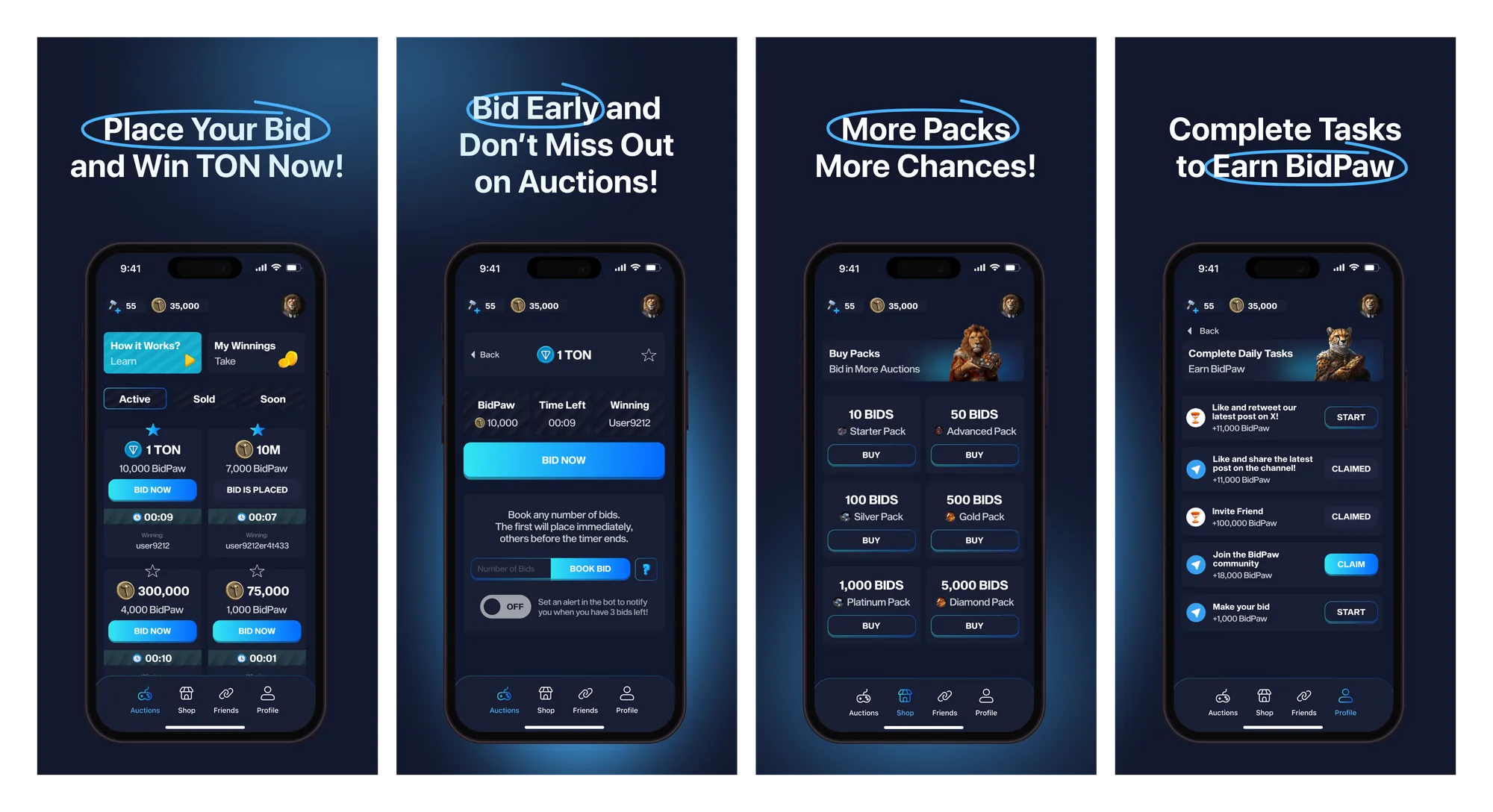
BidPaw: teaching, hooking, then monetizing a crypto auction game

A Telegram game where every bid adds one cent and resets a 10-second timer. I designed it from the first sketch to payments: UX/UI, brand, characters and every animation.

Role
Sole product designer
Timeline
2024–2025
Team
Owner, PM, 1 developer
Platform
Telegram mini-app
1 monthfrom concept to launch of the first version
100K+subscribers across the game and news chats at peak
~30%more engagement after auto-bidding (BidBuddy)
3iterations: learn, return, pay
The problem

A new mechanic nobody knew, and no reason yet to come back

Penny auctions are unusual even for crypto players. Players had to understand the rules without reading them, get into the habit of returning daily, and eventually pay for bids. The business wanted all three in one release; I argued for doing them in order.

Core loop

Everything in the product exists to teach, repeat or monetize this loop

+1¢Each bid raises the price by one cent
00:10The timer resets to ten seconds
WinNobody outbids you before zero, the lot is yours
AgainNext lot, next timer
Strategy

Three iterations, each fixing what the last one revealed

Iteration 01Teach the game

Light, neutral UI so the mechanic is the only thing to learn. Step-by-step Lottie walkthrough.

Iteration 02Build a daily habit

Dark, cinematic look. Daily tasks, rewards, leaderboards, referrals and levels.

Iteration 03Learn by playing, then pay

Deep navy and cyan. Interactive tutorial, wallets, Telegram Stars and crypto checkout.

01 · Teach

Explain one rule per screen

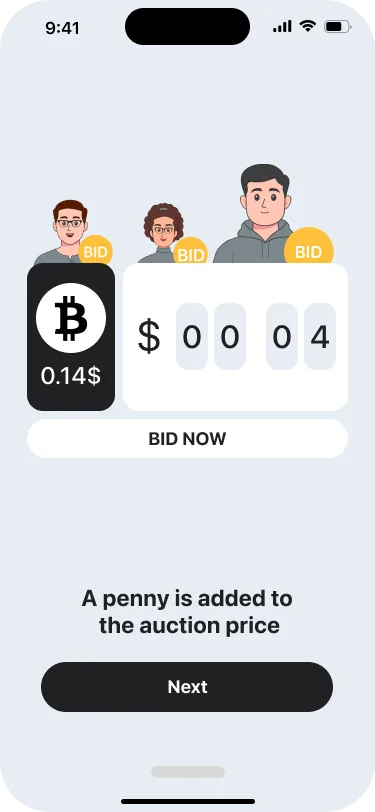
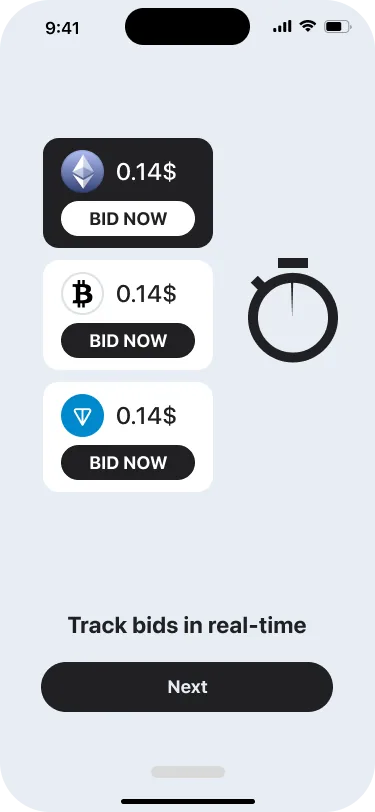
Onboarding shows the mechanic in four beats: the auction starts at $0.00, a bid costs a few cents, each bid adds a penny, and you track it live. The game screens then reuse exactly the same card, so nothing new appears when the real game starts.

What we learned: players understood the game, but had no reason to open it again tomorrow.
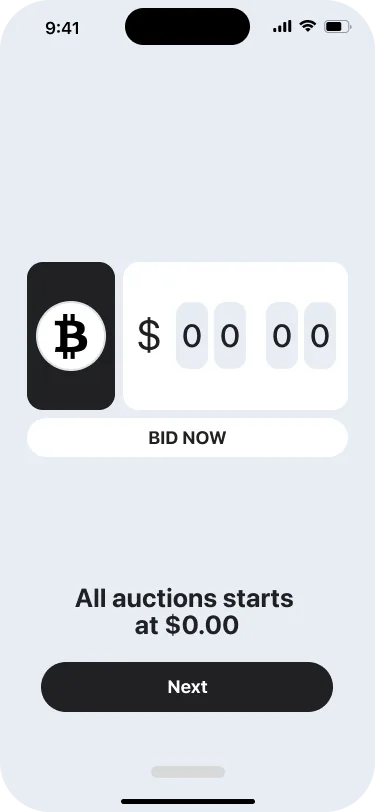
Onboarding: all auctions start at $0.00
Auctions start at $0.00
Onboarding: a penny is added to the price with each bid
Each bid adds a penny
Onboarding: track bids in real time
Track bids in real time
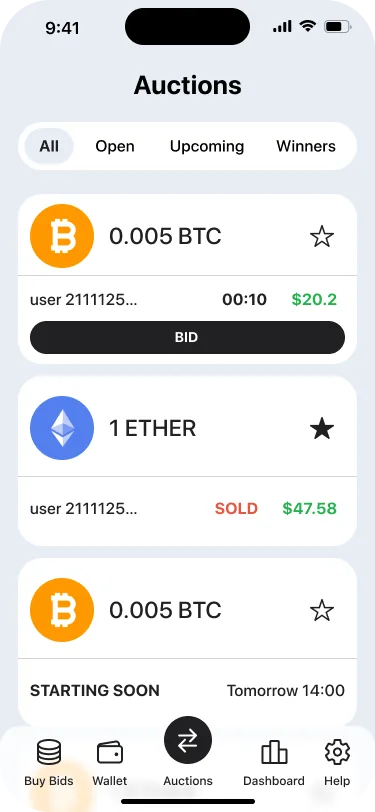
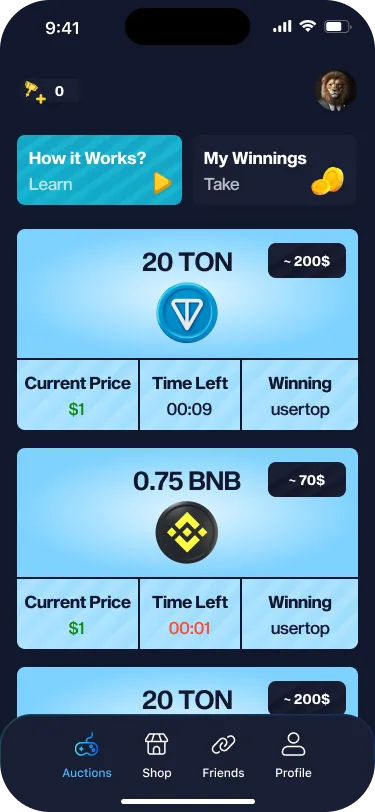
Auctions list with live, sold and upcoming lots
Lobby: live, sold, upcoming
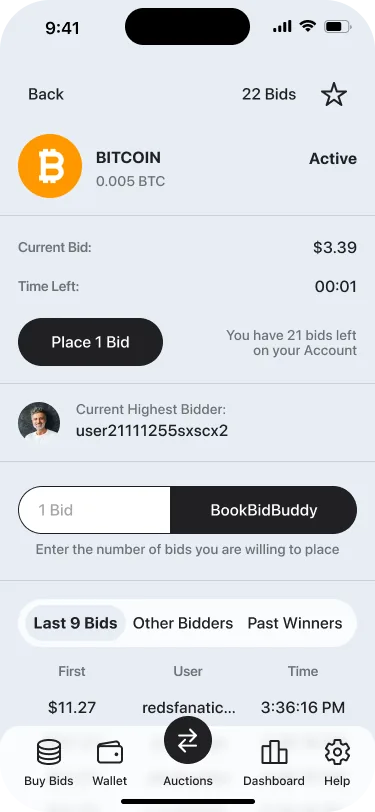
Auction detail with current bid, timer and bid history
Auction: timer, leader, history
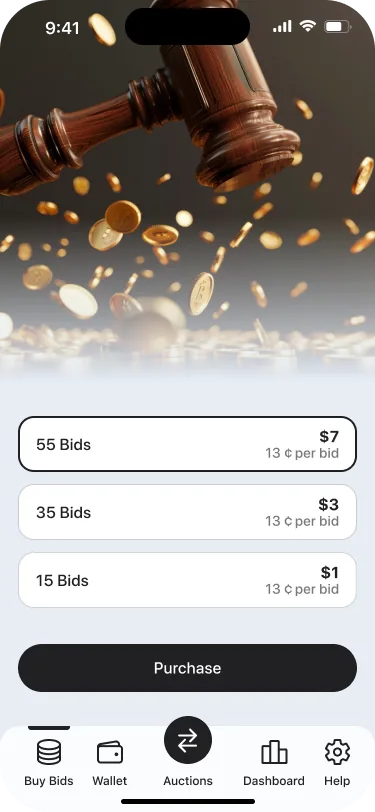
Bid packs purchase screen
Bid packs, priced per bid
02 · Return

Make bidding feel like an event, then give players a reason to come back daily

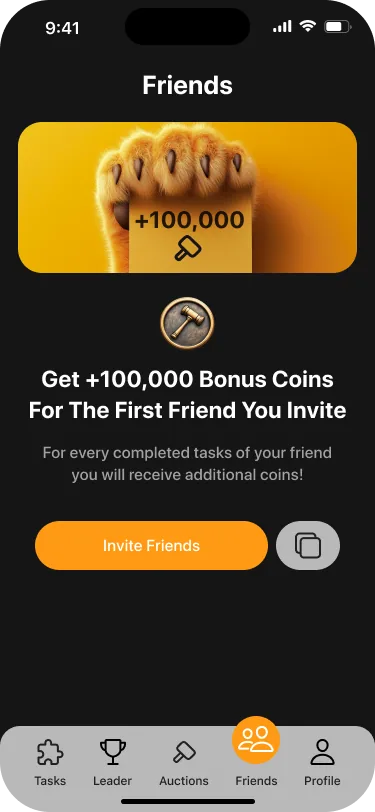
I moved the visual direction to a dark, cinematic world with an animal mascot and amber accents, so placing a bid, winning and claiming a reward each had their own moment. Around the auctions I added a retention loop: daily check-in, social tasks, levels that unlock bigger lots, leaderboards and a referral program paying a share of friends’ winnings.

We held monetization back on purpose: players first had to learn the game and play every day.
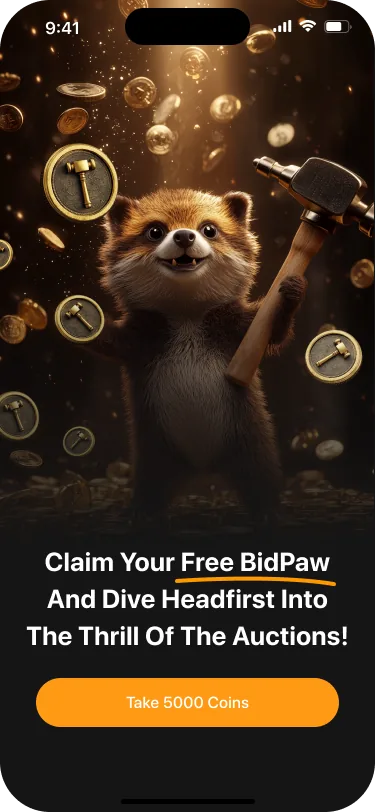
Welcome screen with mascot and 5000 free coins
Welcome bonus: 5,000 coins
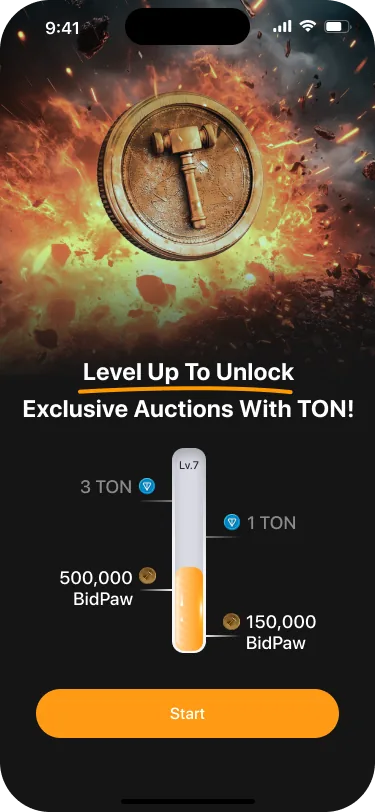
Level up to unlock exclusive auctions
Levels unlock bigger lots
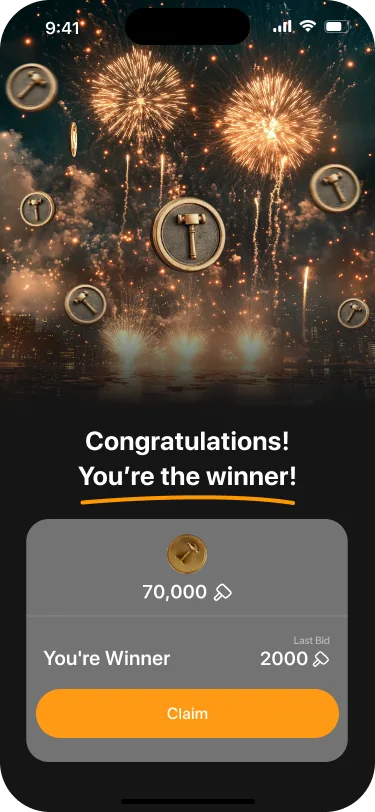
Win celebration screen
The win moment
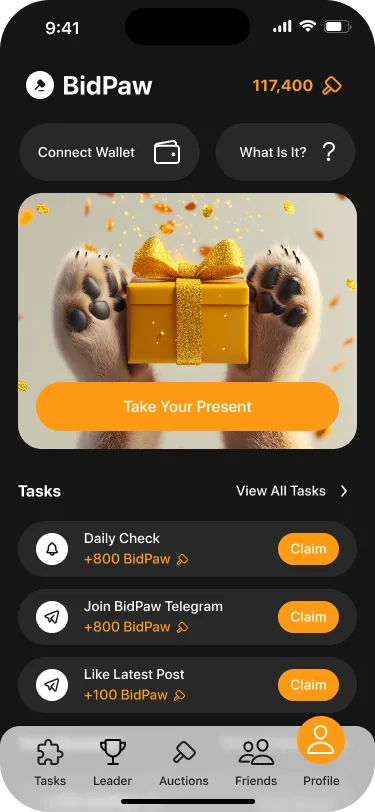
Home with daily tasks and rewards
Daily tasks and rewards
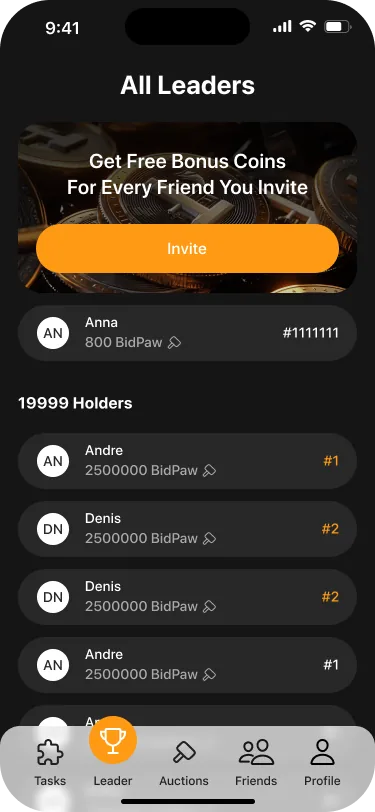
Leaderboard
Leaderboard
Referral program screen
Referrals

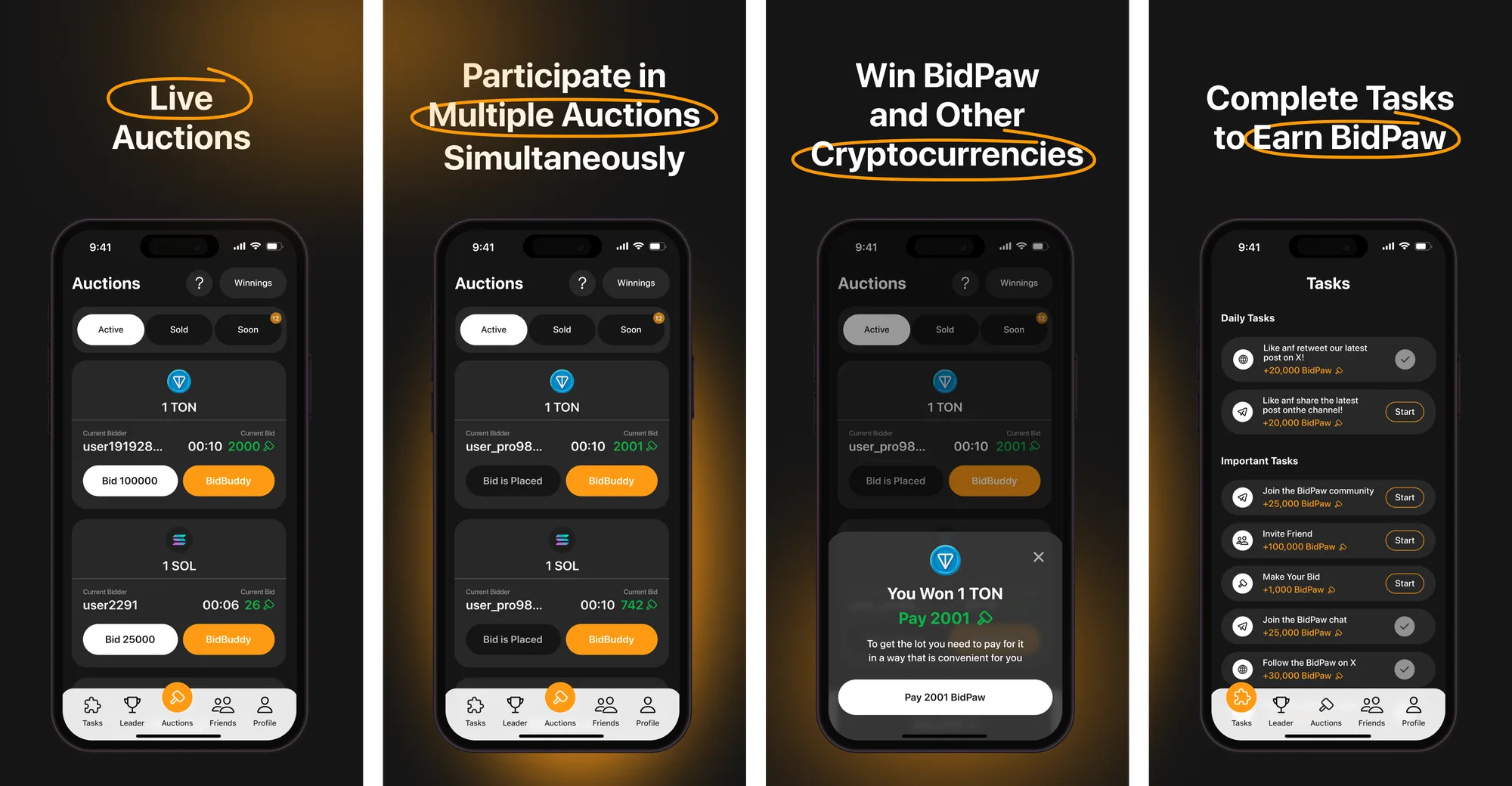
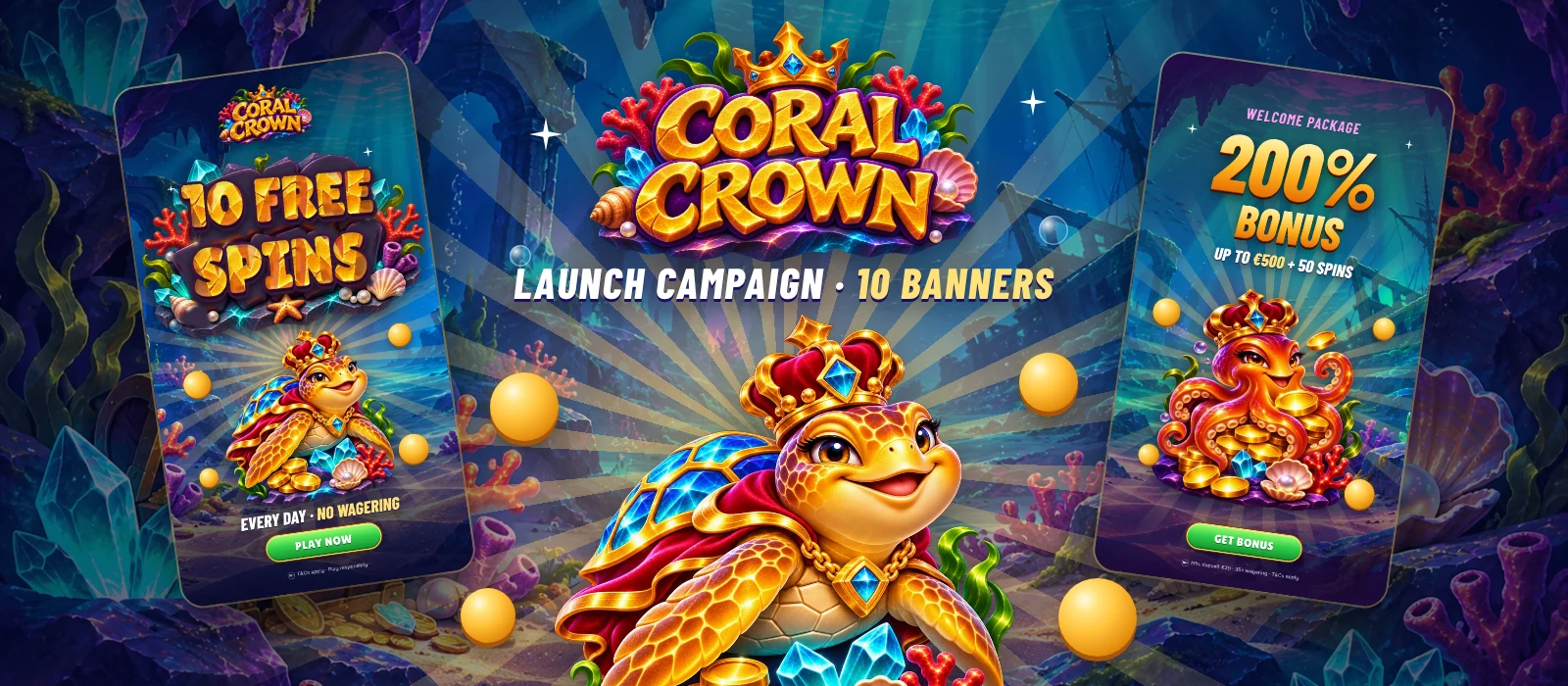
Promo creatives for Telegram acquisition, iteration 02

03 · Pay

Learn by doing, and pay without leaving the game

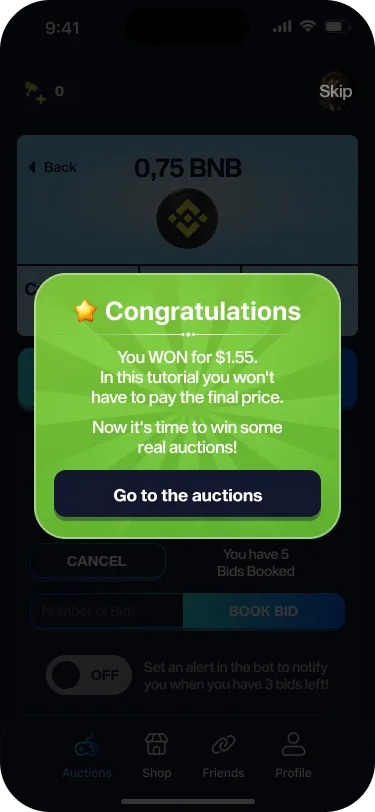
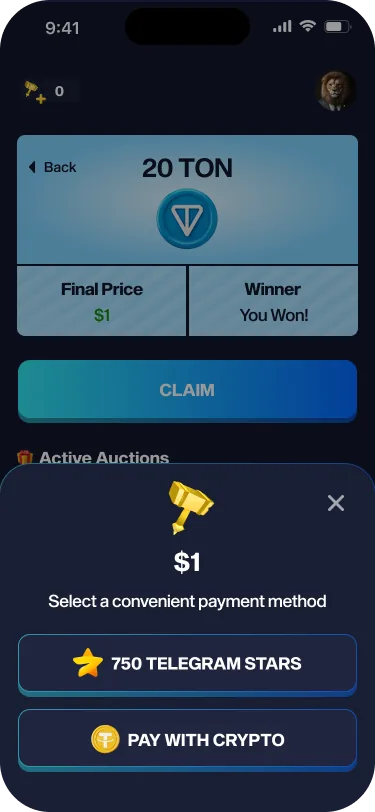
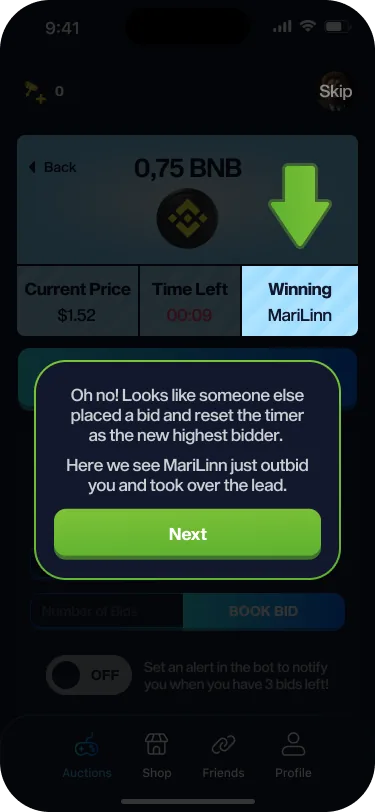
Onboarding became a simulated auction: the player bids, gets outbid, sets up auto-bidding and wins, all on real UI with coach marks. Then wallets, bidding and checkout became one connected flow, with Telegram Stars or crypto as payment options inside the game.
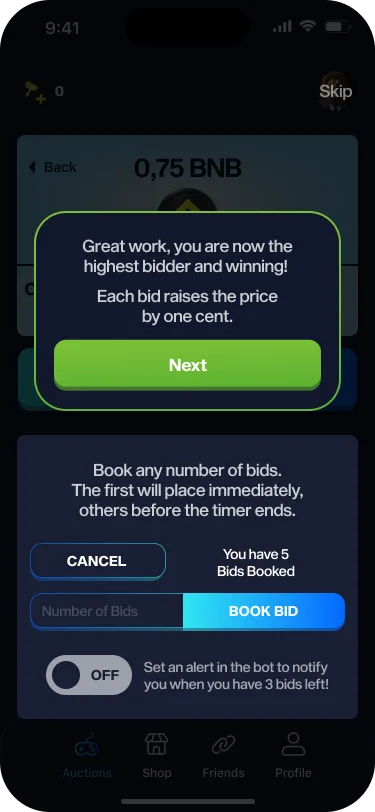
Interactive tutorial: you are the highest bidder
Tutorial: you’re leading
Interactive tutorial: someone outbid you
Tutorial: you’ve been outbid
Interactive tutorial: congratulations, you won
Tutorial: first win
Auctions lobby, iteration 3
Lobby with buy-it-now
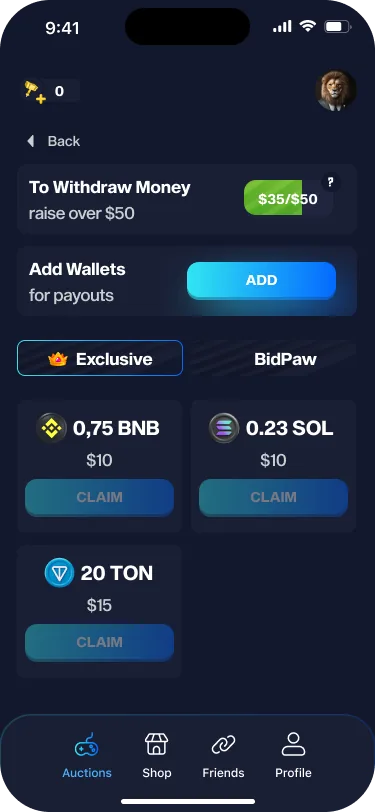
Winnings and wallets screen
Winnings and payouts
Payment method sheet: Telegram Stars or crypto
Stars or crypto checkout
Key feature

BidBuddy: win without watching the timer

Problem

To win, players had to sit in the auction and tap in the last second. Most of them couldn’t, so they stopped bidding.

Solution

Before the auction, the player sets a number of bids. BidBuddy places them right before the timer runs out. Unspent bids return to the balance after a win.

Why a number and not a strategy screen: one input is something players can set in five seconds.

Result

Engagement grew by about 30%, and players no longer needed to be online during an auction.
Results

What shipped

  • First version from concept to launch1 month
  • Subscribers across game and news chats, at peak100K+
  • Engagement after auto-bidding~30%
  • Monetization through Telegram Stars and crypto, after two iterations of learning and habitIteration 03

What I’d do next: add a soft spending reminder to BidBuddy (budget used this week) so auto-bidding stays a convenience rather than a way to lose track of spend.

← All cases
ConceptCase 02

Nightjar: from ad click to first deposit

A redesign of the most expensive journey in a casino: the player who clicked a bonus ad, registered, passed verification and paid for the first time.

Type
Self-initiated concept
Brand
Nightjar (fictional)
Scope
Landing, sign-up, KYC, deposit
Platform
Mobile web
About this case. Nightjar is a fictional brand. The baseline figures come from public industry research; the targets are the hypotheses I would test, not measured results.
1 in 3registered players ever make a first depositIndustry baseline
6 in 10abandon sign-up if it takes over 5 minutesIndustry baseline
<2 mintarget median time from landing to deposit screenTarget
+15%target uplift in registration → first depositTarget · to A/B test
The problem

The ad promises a sprint, the product delivers a queue

A player taps “100% up to €200 + 50 spins”, lands on a generic home page, hunts for the offer, fills a long form, gets stopped by verification and finally meets fifteen payment methods with no fees or timings. Every team hits its own number; the journey between them leaks.

Some of that friction is required by the licence. The goal is to keep the required steps and remove the accidental ones.

Journey audit

Five steps, three of them leaking

01 · Ad clickLands on a generic home, the offer is lost
02 · Sign-upOne long form, 11 fields, no progress
03 · VerificationBolted on at the end, unclear wait
04 · Deposit15 methods, no fees or timings shown
05 · First gameBonus rules hidden in terms

Audit based on a benchmark of mobile sign-up flows across European casino brands.

Key decisions

Offer-first landing, and the bonus stays pinned

The ad deep-links to its own offer page. A compact bonus chip then travels through every step, so the player always sees what they’re signing up for.

Why: the promise is the motivation. Losing sight of it is the first place players drop.

Three short steps with verification inside the flow

Email and password, then personal details with address lookup, then ID. Data is checked in the background as the player types; documents are requested only when the electronic check can’t confirm identity.

Why: verification can’t be removed, but it can stop being a surprise at the end.

A deposit screen that answers questions before they’re asked

Three methods recommended for the player’s country, each with fee and timing. Moderate preset amounts, with the bonus amount calculated live. An optional deposit limit sits on the same screen, not three menus away.

Why: uncertainty about fees and timing is a reason to leave; a visible limit builds trust at the moment money moves.

9:41●●●
Log in
Welcome offer
100% up to €200
+ 50 free spins

On your first deposit from €20. Spins on Moon Orchard. Wagering x35, full terms one tap away.

Bonus€200
Free spins50
Time to claim7 days
Claim offer

18+ · Play responsibly · Terms apply

Offer landingThe ad lands on its own offer, with the key terms in plain view.
9:41●●●
Step 2 of 3~1 min left
%€200 + 50 spins
waiting for you after sign-up
About you
First nameOlena
Last nameKoval-Brandt
Date of birth14 / 03 / 1994
AddressStart typing your street…

We check your details as you type, so most players don’t need to upload documents.

Continue
Sign-up, step 2Progress, time left, and the bonus chip keep the goal visible.
9:41●●●
First depositVerified ✓
€20€50€100
You deposit €50Bonus +€50 · 50 spins
Recommended in your country
Pay by bank
Instant · no fee
●
Card
Instant · no fee
○
Crypto
~10 min · network fee
○
Set a monthly deposit limitOptional
Deposit €50
DepositThree local methods with fee and timing, live bonus maths, limit on the same screen.
How I’d measure it

A/B test plan

  • Primary: registration → first deposit conversion+15% target
  • Median time from landing to deposit screen<2 min target
  • Drop-off at the verification step−20% target
  • Guardrail: share of new players who set a deposit limitmust not fall

Test order: offer landing first (cheapest change, biggest top-of-funnel effect), then the three-step sign-up, then the deposit screen.

← All cases
ConceptCase 03

Nightjar: a lobby that helps players find their next game

Thousands of games, and most players replay the same five. A lobby built around intent, a game card that tells the player what they need in one glance, and a component system that runs two brands.

Type
Self-initiated concept
Brand
Nightjar + Saltgrass
Scope
IA, lobby, search, design system
Platform
Mobile app
About this case. Fictional brands; game titles and providers are invented. Targets are hypotheses to test.
−30%time to start a game from opening the appTarget
+10%players trying a new game each weekTarget
1component library for every lobby surfaceDelivered in concept
2brand skins on the same tokensDelivered in concept
The problem

A catalogue sorted by provider, used by people sorted by mood

Typical lobbies list games by provider and category: Slots, Live, Table, Megaways. Players think in other terms: “carry on where I stopped”, “something quick on a low stake”, “a big jackpot tonight”. When the lobby doesn’t speak that language, players scroll, give up and replay what they know.

Key decisions

Rows by intent, not by provider

Continue playing, Jackpots live now, New this week, Quick sessions, then classic categories. Rows are personal; the order is set by the player’s history.

Why: the first row should be the one most players need, and for returning players that’s the game they left.

A game card that answers three questions

Is it new or popular? Is there a jackpot and how big? Who made it? Live jackpot values update on the card, and badges are limited to one per card so they stay readable.

Why: a card with four badges says nothing; one badge with a number says a lot.

Search that works before you finish typing

Recent and trending games appear on focus. Filters by provider, volatility and feature are chips, not a separate screen, and “Try in demo” is available before the player commits money.

Why: a filter screen is one more step; chips keep the results in view.

9:41●●●
€84.20
For youSlotsLiveJackpots
Continue playingSee all
Copper Bulls
Glacier Keys
Velvet Koi
Jackpots live nowSee all
Star Cellar
Wheel of Ten
Desert Lamp
New this weekSee all
NewJade Tide
NewRoyal Grid
NewNight Train
LobbySearchMissionsWalletProfile
LobbyRows ordered by intent; the first row is where the player left off.
9:41●●●
tide
AllLow volatilityLanternworksFree spins
6 games
NewJade Tide
Tide Keeper
Low Tide
Tidal Koi
Tide Grid
Red Tide
Jade TideLanternworks
Volatility: lowMin bet €0.10
Try in demoPlay
LobbySearchMissionsWalletProfile
SearchFilter chips stay above the results; demo play before real money.
9:41●●●
€84.20
For youSlotsLiveJackpots
Continue playingSee all
Copper Bulls
Glacier Keys
Velvet Koi
Jackpots live nowSee all
Star Cellar
Wheel of Ten
Desert Lamp
New this weekSee all
NewJade Tide
NewRoyal Grid
NewNight Train
LobbySearchMissionsWalletProfile
Second skinSame components, Saltgrass tokens: a light brand for a different market.
Design system

One library, two brands, every lobby surface

White-label and multi-brand operators run several casinos on one platform. The system separates brand tokens (color, type, radius) from components, so a new skin is a token file, not a redesign.

Color tokens · Nightjar / Saltgrass
bg
surface
accent
win
bg
surface
accent
win
Type scale
€84,210jackpot · 26
Jackpots liverow title · 17
Jade Tidecard · 15
Min bet €0.10meta · 13
Game card anatomy
Star Cellar
  • Art, 3:4, safe area for title
  • One badge max: New, Hot or Jackpot
  • Live jackpot value, tabular figures
  • Provider on long-press and in details
  • States: default, pressed, loading, unavailable in region
How I’d measure it
  • Time from app open to game start−30% target
  • Share of players who try a new game each week+10% target
  • Search sessions ending in a game launchtrack
  • Guardrail: lobby load time on mid-range Android<2 s
← All cases
ConceptCase 04

Nightjar: missions, levels and limits in one system

A retention layer that rewards how people play rather than how much they spend, with safer-play tools designed as part of it instead of hidden in settings.

Type
Self-initiated concept
Brand
Nightjar (fictional)
Scope
Missions, levels, limits
Builds on
BidPaw iteration 02
About this case. Fictional brand. Baselines come from public research; targets are hypotheses to test.
<20%typical 30-day retention estimate in online casinoIndustry baseline
−46%lower limits when players type them instead of picking high presetsBIT research
+5 pptarget day-30 retention for players with missionsTarget
2×target share of players who set a limitTarget
The problem

Loyalty programs that confuse, and safety tools nobody finds

Many loyalty programs reward logins or raw spend, use ten tiers with unclear rules and let points expire quietly. Players end up asking support how levels work. At the same time, deposit limits and reality checks sit deep in account settings, and most players never open them.

I treated both as one design problem: a system players understand is also a system they can control.

Key decisions

Missions that reward variety and time, not spend

“Try 3 games you haven’t played”, “Play on 4 days this week”, “Finish the tutorial for live roulette”. Each mission fits a short session at a normal stake.

Why: missions that require a big turnover are ignored by casual players and push the wrong players to spend more. I learned this pattern in BidPaw, where daily tasks drove returns without pressure to pay.

Five levels, one page of rules

XP comes from missions and active days. Every level shows exactly what unlocks next, and XP never expires without a visible countdown.

Why: a ten-tier ladder looks good in a deck and confuses everyone on a phone.

Limits designed like a feature

The limit screen opens with an empty field, not a dropdown that starts at €10,000. Lowering a limit is instant; raising it waits 24 hours. The reality check becomes a short session summary: time played, net result, a one-tap break.

Why: research shows high preset options anchor players to higher limits. And players with an active limit get missions that never push them toward it.

9:41●●●
MissionsRules
Level 3 · Night Owl
680 / 1,000 XP · next: weekly free spins
TodayThis weekDone
3
Try 3 new games
2 of 3 · +120 XP
4
Play on 4 days this week
2 of 4 · +200 XP
★
Learn live roulette
2-min tutorial · +80 XP
LobbySearchMissionsWalletProfile
MissionsProgress, reward and next unlock on one screen; no mission asks for spend.
9:41●●●
Deposit limitClose
DayWeekMonth
How much do you want to deposit at most this month?
€ 150
Deposited this month€60
Left after this limit€90

Lowering a limit works right away. Raising it takes effect after 24 hours.

Set €150 monthly limit
Limit setupAn empty field instead of high presets, with the consequence spelled out.
9:41●●●
Copper Bulls
You’ve played for 45 minutes
Spins212
Net result−€18.40
Monthly limit left€90
Take a 1-hour breakKeep playing
Reality checkA session summary with a real choice, not a pop-up to dismiss.
How I’d measure it
  • Day-30 retention for players with at least one completed mission+5 pp target
  • Share of active players with a deposit limit2× target
  • Support tickets about levels and rewards−40% target
  • Guardrail: average deposit per player with missions vs withoutno increase

The last guardrail is the point: if missions raise deposits instead of play, the design is wrong.