

BidPaw: teaching, hooking, then monetizing a crypto auction game
A Telegram game where every bid adds one cent and resets a 10-second timer. I designed it from the first sketch to payments: UX/UI, brand, characters and every animation.
- Role
- Sole product designer
- Timeline
- 2024–2025
- Team
- Owner, PM, 1 developer
- Platform
- Telegram mini-app
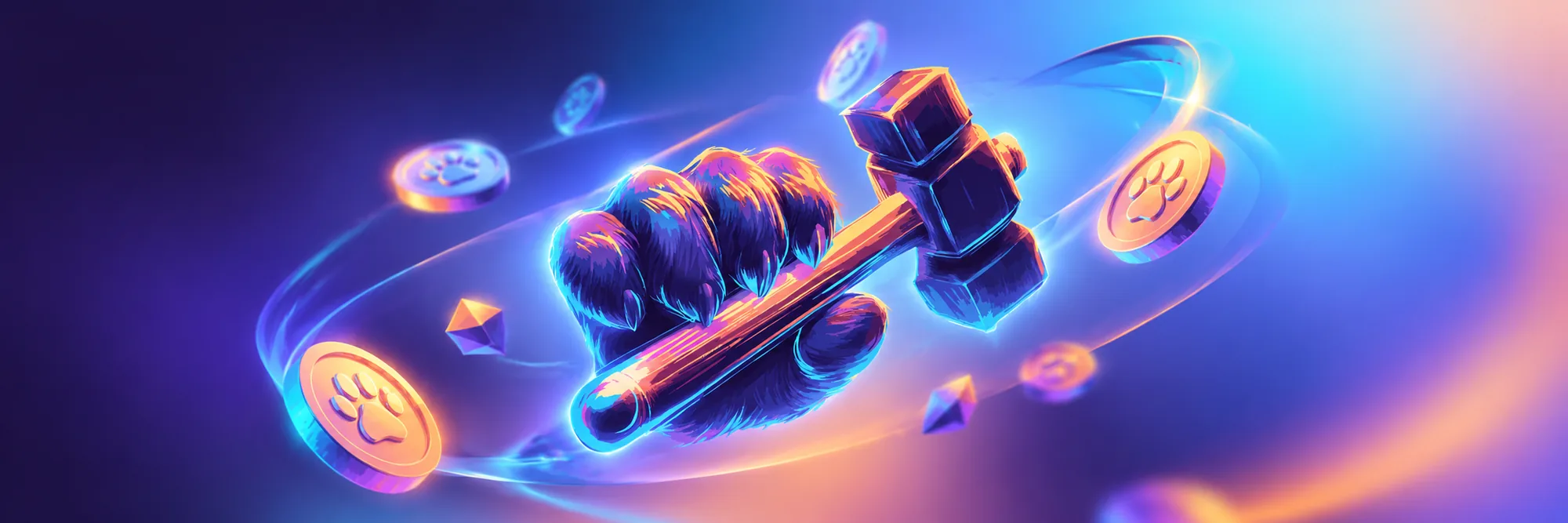
A new mechanic nobody knew, and no reason yet to come back
Penny auctions are unusual even for crypto players. Players had to understand the rules without reading them, get into the habit of returning daily, and eventually pay for bids. The business wanted all three in one release; I argued for doing them in order.
Everything in the product exists to teach, repeat or monetize this loop
Three iterations, each fixing what the last one revealed
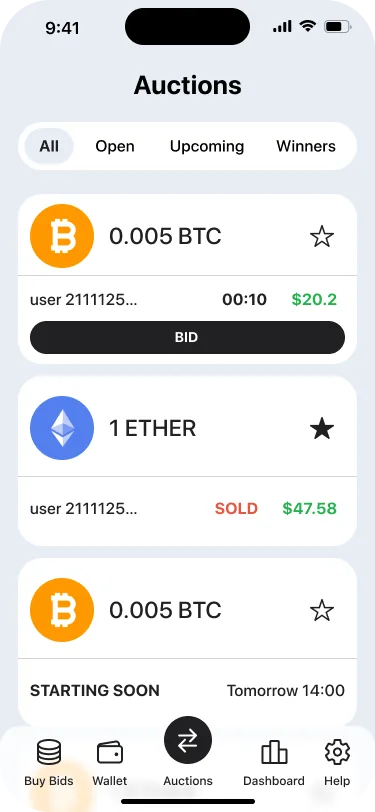
Light, neutral UI so the mechanic is the only thing to learn. Step-by-step Lottie walkthrough.
Dark, cinematic look. Daily tasks, rewards, leaderboards, referrals and levels.
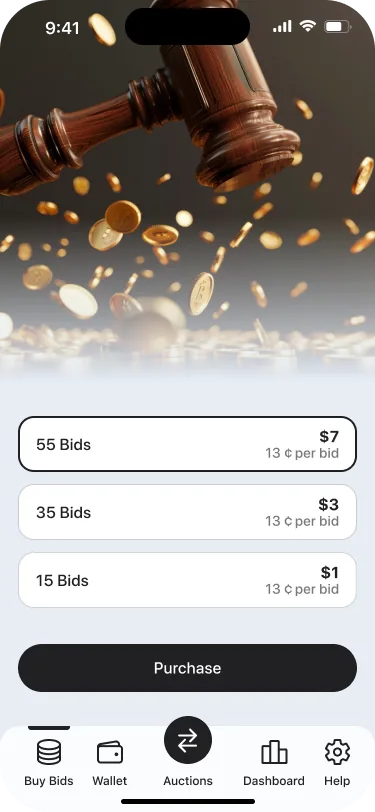
Deep navy and cyan. Interactive tutorial, wallets, Telegram Stars and crypto checkout.
Explain one rule per screen
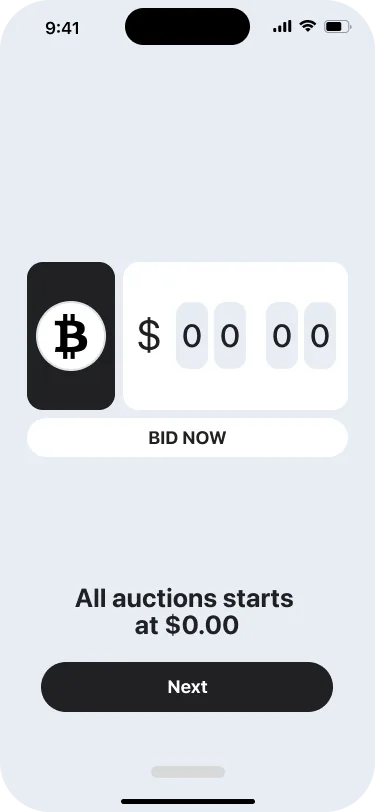
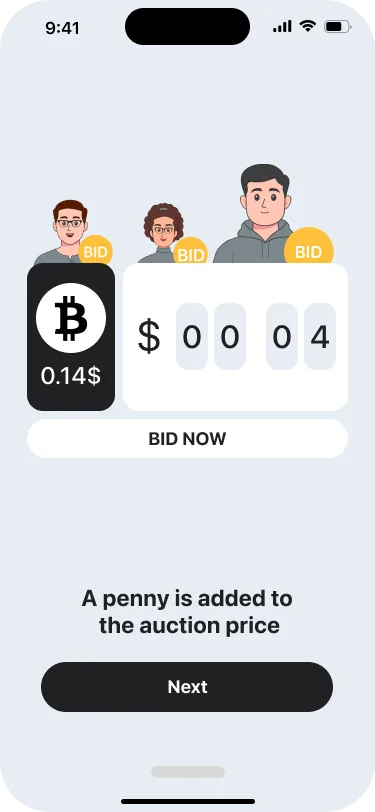
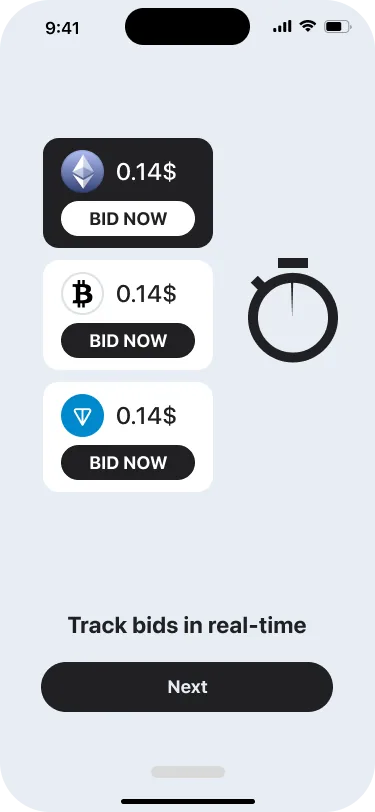
Onboarding shows the mechanic in four beats: the auction starts at $0.00, a bid costs a few cents, each bid adds a penny, and you track it live. The game screens then reuse exactly the same card, so nothing new appears when the real game starts.
What we learned: players understood the game, but had no reason to open it again tomorrow.
Make bidding feel like an event, then give players a reason to come back daily
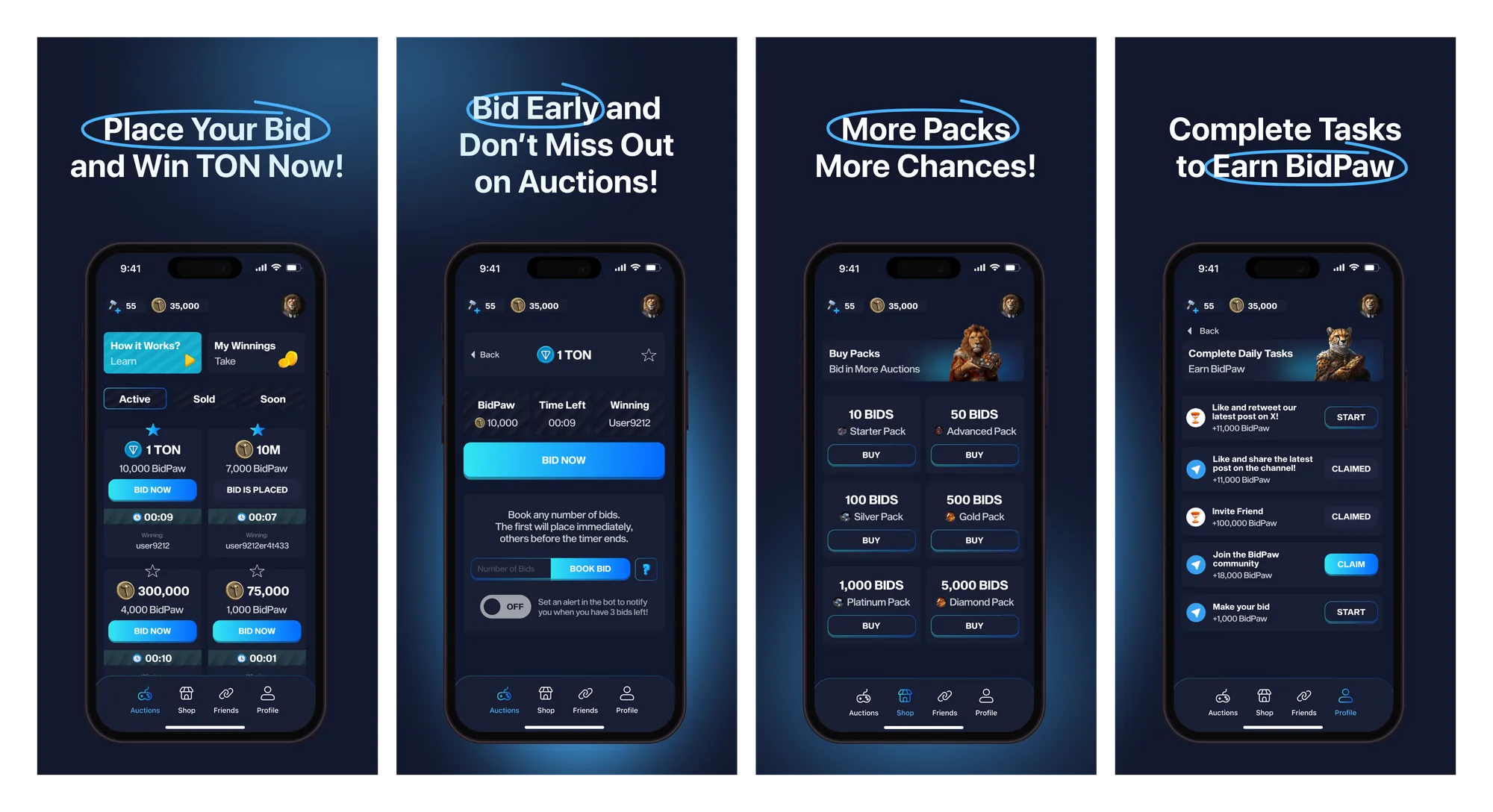
I moved the visual direction to a dark, cinematic world with an animal mascot and amber accents, so placing a bid, winning and claiming a reward each had their own moment. Around the auctions I added a retention loop: daily check-in, social tasks, levels that unlock bigger lots, leaderboards and a referral program paying a share of friends’ winnings.
We held monetization back on purpose: players first had to learn the game and play every day.
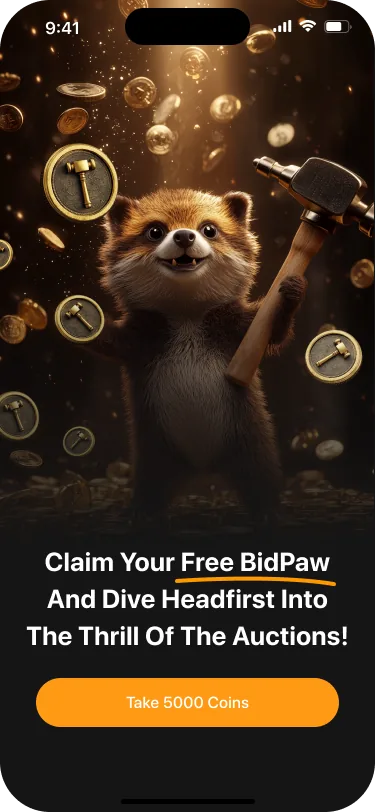
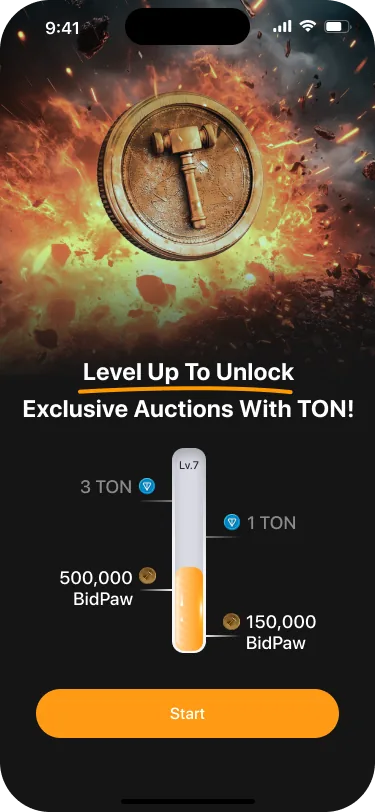
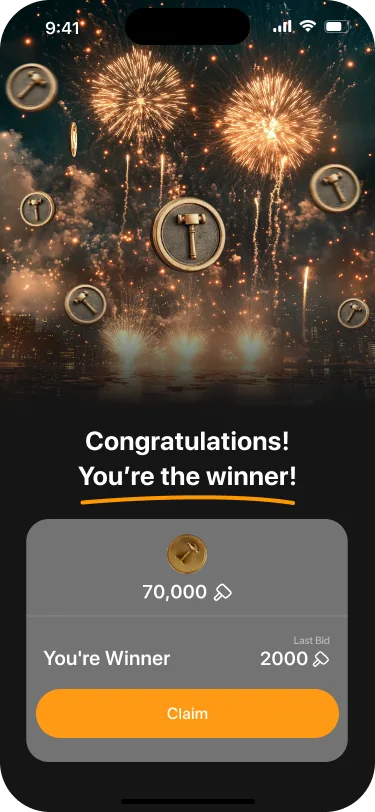
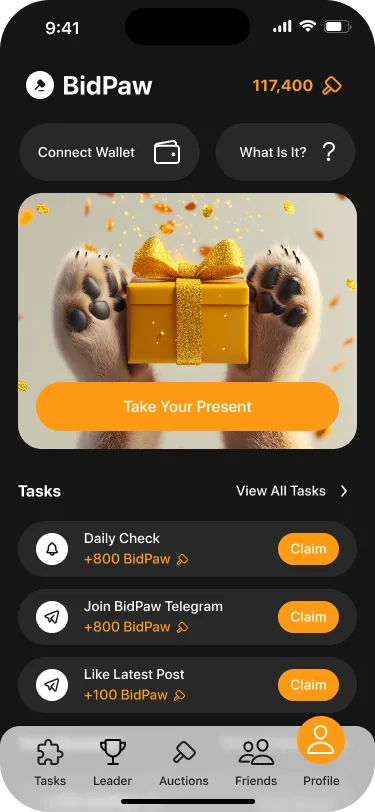
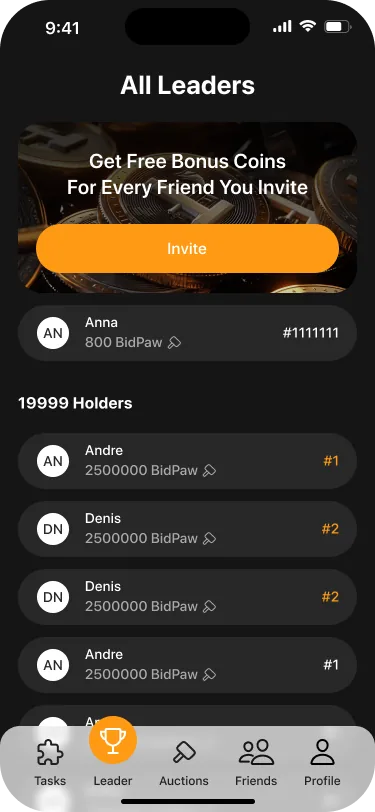
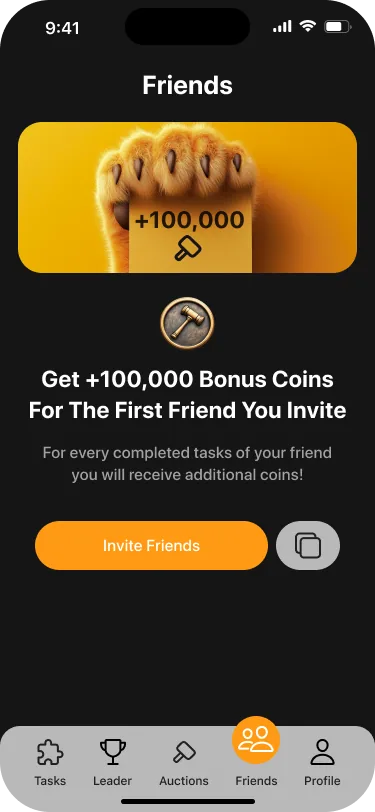
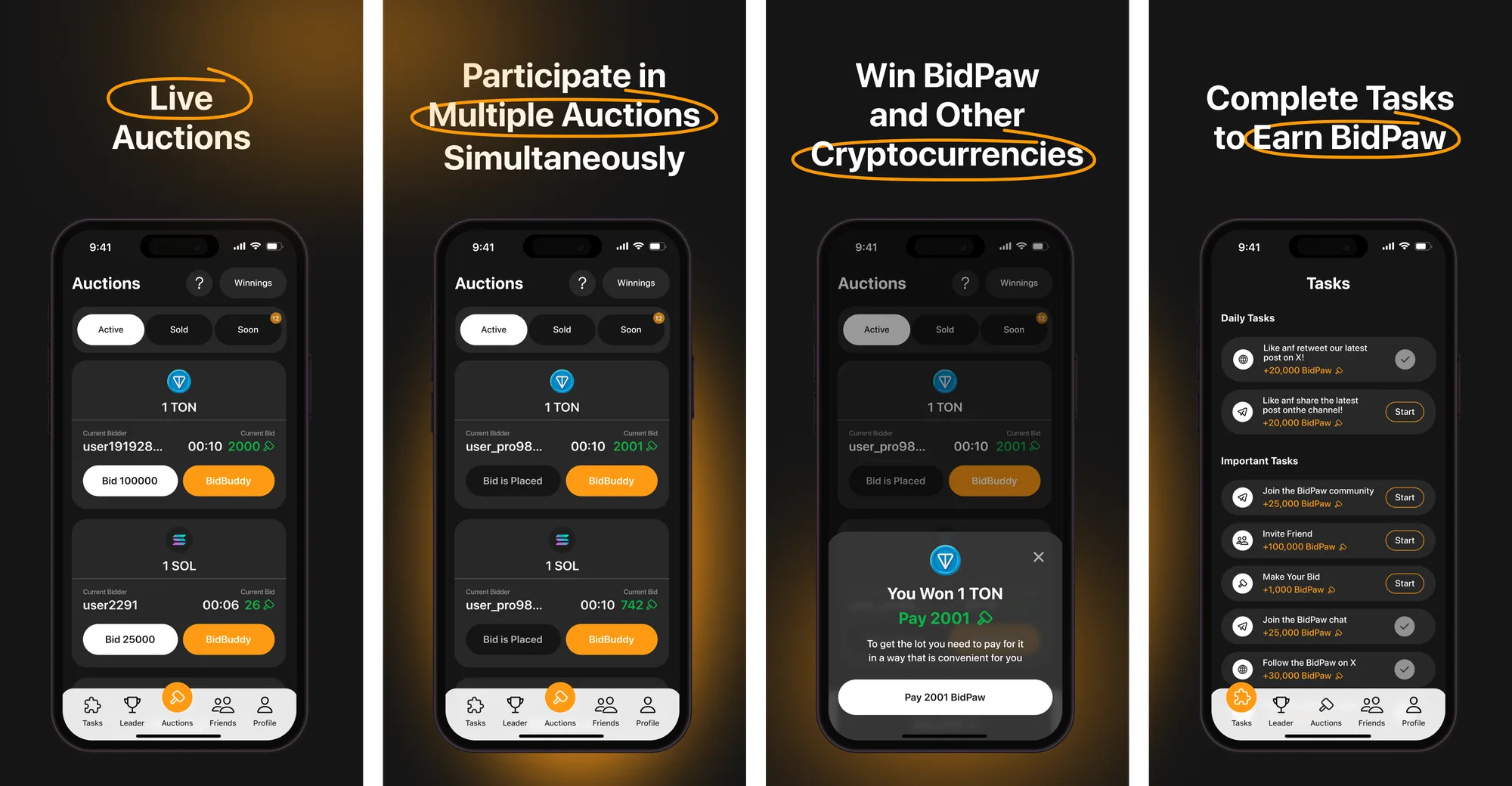
Promo creatives for Telegram acquisition, iteration 02
Learn by doing, and pay without leaving the game
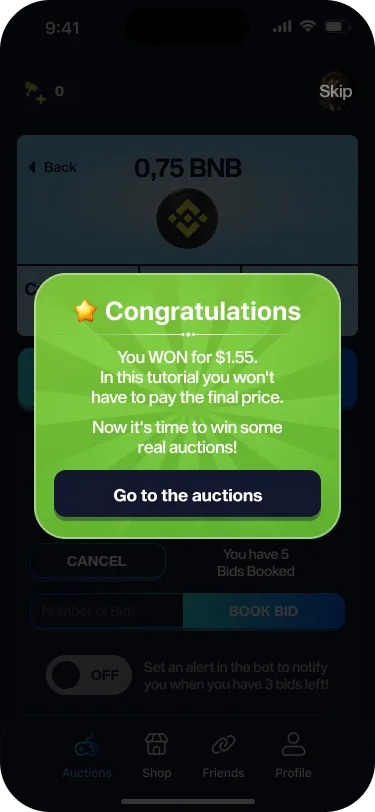
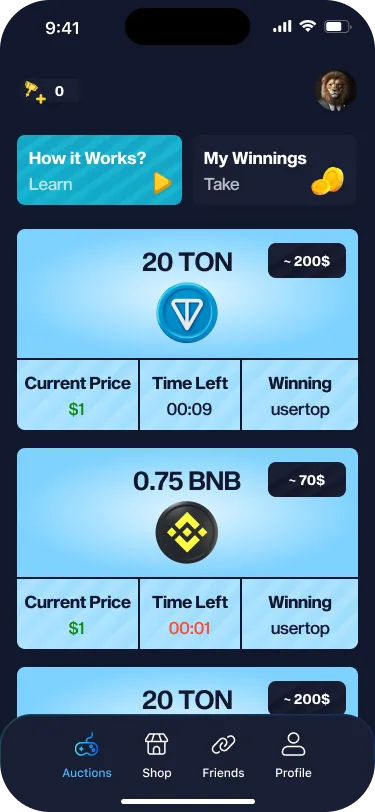
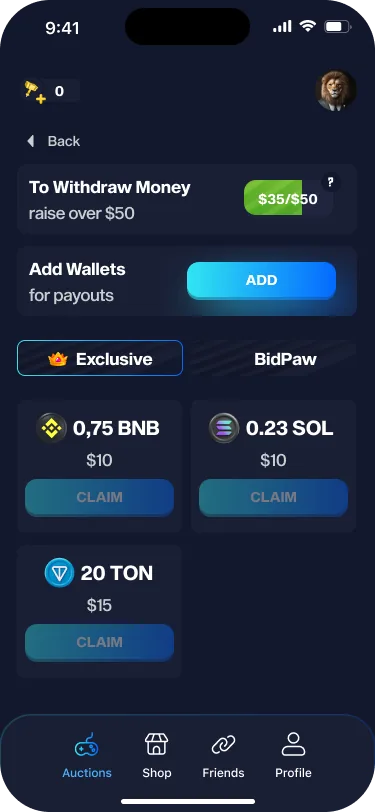
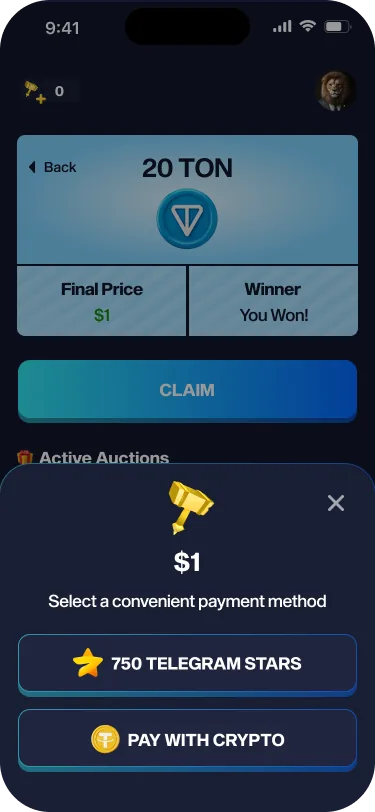
Onboarding became a simulated auction: the player bids, gets outbid, sets up auto-bidding and wins, all on real UI with coach marks. Then wallets, bidding and checkout became one connected flow, with Telegram Stars or crypto as payment options inside the game.
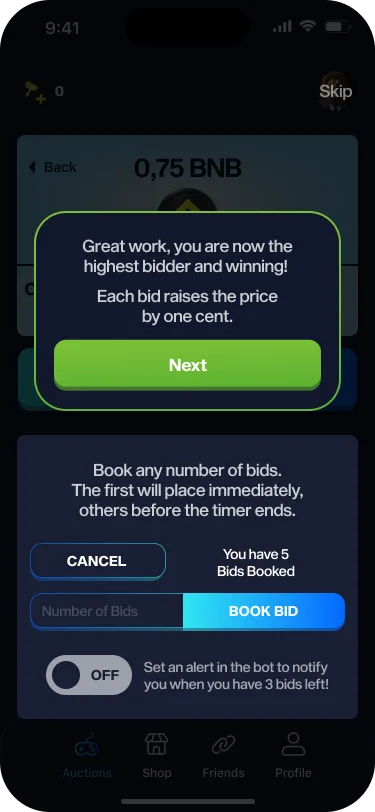
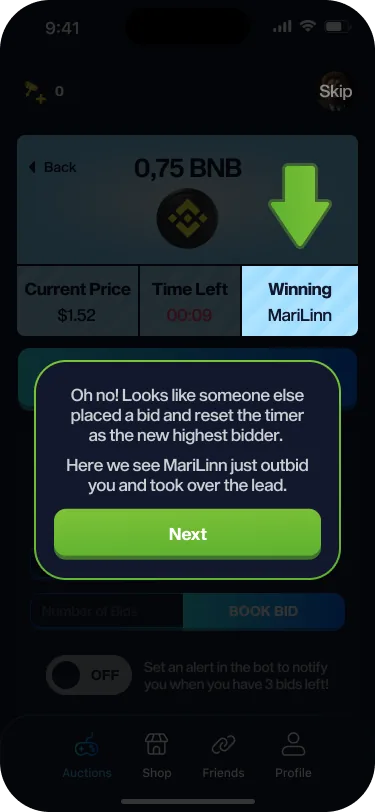
BidBuddy: win without watching the timer
Problem
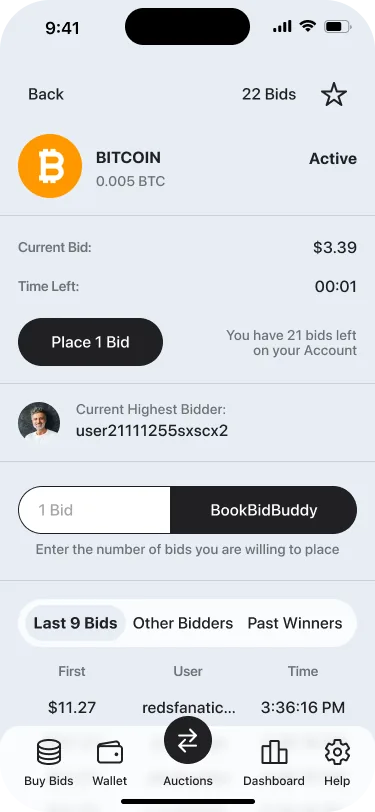
To win, players had to sit in the auction and tap in the last second. Most of them couldn’t, so they stopped bidding.
Solution
Before the auction, the player sets a number of bids. BidBuddy places them right before the timer runs out. Unspent bids return to the balance after a win.
Why a number and not a strategy screen: one input is something players can set in five seconds.
Result
Engagement grew by about 30%, and players no longer needed to be online during an auction.
What shipped
- First version from concept to launch1 month
- Subscribers across game and news chats, at peak100K+
- Engagement after auto-bidding~30%
- Monetization through Telegram Stars and crypto, after two iterations of learning and habitIteration 03
What I’d do next: add a soft spending reminder to BidBuddy (budget used this week) so auto-bidding stays a convenience rather than a way to lose track of spend.
Nightjar: from ad click to first deposit